Treatments
Caring, affordable, private dental care, individually tailored just for you, including crowns, fillings and root canal treatments. Contact us now for more information.
Contact us today

Caring, affordable, private dental care, individually tailored just for you, including crowns, fillings and root canal treatments. Contact us now for more information.
Contact us today
Most people have fillings of one sort or another in their mouths. This is usually due to tooth decay. Dental decay happens when the enamel and dentine of a tooth become softened by acid attack, producing a cavity (hole). You can read more about tooth decay in our Preventive Dentistry section.
Nowadays fillings can be natural looking. Many people are more conscious about the way they look, so they don't want silver fillings that show when they laugh or smile. White fillings are made from a very hard substance and will withstand the forces in your mouth when you bite and chew over a long period of time. This will allow you to smile without a metallic glint in sight, giving your teeth a more natural appearance overall.
White fillings are made from a very hard substance and will withstand the forces in your mouth when you bite and chew over a long period of time. This will allow you to smile without a metallic glint in sight, giving your teeth a more natural appearance overall.
As dentists we believe prevention is always better than cure and will always encourage and help you to look after your teeth so you don’t develop tooth decay in the first place. If however, you need a filling then we recommend white fillings as a good solution that is both aesthetic and functional.
We can help you achieve the smile you want. If your teeth are stained, discoloured, chipped, broken, misaligned, misshapen, or have gaps between them, modern cosmetic dentistry can give you a better smile.
Cosmetic dentistry encompasses a wide variety of different dental treatments that can help deliver you a better smile. Book a consultation appointment with one of our dentists to discuss which option might be the best for you.
If your front teeth are stained, chipped, or misaligned, veneers will give you a good life-like appearance with minimum tooth adjustment.
A veneer is a facing on the front of your teeth usually your top teeth. It is just like a false finger nail. Veneers are made out of porcelain and are used mainly for aesthetic reasons.
Veneers make teeth look natural and healthy, and because they are very thin and are held in place by a special strong bond (rather like super-glue) very little preparation of the tooth is needed. Porcelain veneers can improve the colour, shape and position of teeth.
A precise shade of porcelain can be chosen to give the right colour to improve a single discoloured or stained tooth or to lighten front teeth (usually the upper ones) generally.
Veneers can also be used to close small gaps, when orthodontics (braces) are not suitable.
If one tooth is slightly out of position, a veneer can sometimes be fitted to bring it into line with the others.
A crown is a type of dental restoration used to fix teeth that have been broken, weakened by decay or have a very large filling. It makes it strong, giving it the shape of a natural tooth. A crown is sometimes known as a 'cap'.
A crown could be used for a number of other reasons, for example:
A bridge is a fixed solution to a missing tooth or teeth. The false teeth are attached onto the neighbouring teeth.
Some bridges can also be fixed to your jaw with dental implants, if you have several teeth next to each other that are missing. This is a stronger solution to support multiple missing teeth.
Once you have a bridge fitted, you will have to take extra care of your daily hygiene regime to ensure it stays plaque free and prevent bad breath. It is therefore imperative that you have regular visits to the dentist for maintenance and early detection of any problems in the long term.
For more information on teeth straightening, please click here.
Teeth are stained by the foods and drinks we consume. Smoking further stains teeth and the natural bright, white shade becomes darkened. Teeth whitening is a successful and simple method of lightening the colour of your teeth.
The most common technique to whiten teeth is home whitening, where custom-made trays containing whitening gel are worn either overnight, or for a few hours in the day.
Tooth whitening is a generally very safe procedure, with the only real side-effect being sensitive teeth. this can easily be managed with sensitivity pastes.
Dental implants offer a permanent solution for your missing teeth. It is a titanium screw which is placed into the jawbone, acting just like a tooth root, securely holding the artificial tooth in your mouth.
Other alternatives for dental implants include bridges or dentures – however bridges can mean destruction of the teeth adjacent to any gap as these are used to support the new tooth. Dentures are also not always favoured as people dislike the idea of having to remove their teeth at night or to clean them! Dental implants really do provide one of the best ways to replace missing teeth.
Implant dentistry offers a clinically proven and safe solution to getting back a great smile. More importantly, implants help restore function so you can eat, chew and bite having to stick to a soft food diet for the rest of your life.
If you have loose or ill-fitting dentures, your ability to eat and speak may become affected. Due to advances in dentistry, there is now a procedure whereby your denture can be fixed to your jaw with dental implants. This treatment, known as implant overdentures or denture stabilisation, offers patients with dentures a more permanent solution, and can improve your quality of life significantly. You will be able to enjoy your favourite foods again and feel comfortable smiling, safe in the knowledge that your dentures are staying put.
Natural teeth may suffer from gum disease if not well looked after, and in the same way implants can also suffer from gum disease. When this progresses, it is called peri-implantitis. This can result in the loss of bone and ultimately mean you end up losing the dental implant altogether, this is extremely rare however you need to be aware that looking after your dental implants is just as important as looking after your natural teeth.
It is therefore imperative that you have regular visits to the dentist for maintenance and early detection of any problems in the long term.
If you have a few or all of your teeth missing, one solution is to have a denture. A denture is made from hard-wearing material that mimics the look of teeth and gums to give you mouth a natural appearance. Your denture will be made to fit snugly on your gums and you will be able to remove it for cleaning.
When you wear a denture for the first time it may get some getting used to when speaking or eating and chewing. It is important that you take extra care in your hygiene regime so that you can avoid bad breath, tooth decay and gum disease. Our dentists will be able to show you how to best take care of your denture and gums.
Looking after your gums is just as important as looking after your teeth. Red and swollen gums that bleed when you brush them could be a sign of gum disease, also known as gingivitis. When gingivitis is left untreated it can develop further into a type of infection known as periodontitis, which affects the entire area surrounding the tooth. A result of this could be losing your tooth, so it’s vital to avoid.
The first sign is blood on the toothbrush or in the rinsing water when you clean your teeth. Your gums may also bleed when you are eating, leaving a bad taste in your mouth. Your breath may also become unpleasant.
Unfortunately, gum disease usually progresses painlessly so that you don’t notice the damage it is doing. Over a number of years, the bone supporting the teeth can be lost, leading to wobbly teeth. If the disease is left untreated for a long time, treatment can become more difficult. This is why it is important to have regular maintenance visits to the dentist, so that any easrly signs of gum disease can be picked up on, and quickly rectified.
You will initially have a very thorough deep clean, sometimes under local anaesthetic. This may be carried out over a number of visits, depending on the severity of the gum disease. We will then go through a recommended oral hygiene routine with you, so that you can readily maintain your newly cleaned teeth and gums, to prevent recurrence of the gum disease.
If a tooth becomes infected due to tooth decay or injury, root canal treatment may be the only option to prevent losing the tooth.
Root canal treatment may be needed when the pulp (nerve) inside your tooth becomes infected through tooth decay or damaged by an injury. This infection may spread through the tooth, which could eventually lead to an abscess, causing a great deal of discomfort.
Using specific techniques and advanced equipment, you will receive a local anaesthetic and the treatment overall should feel no different to having an ordinary filling placed.
RCT is carried out to relieve pain, prevent further decay and spread of infection, and ultimately save a tooth which otherwise would require extraction. The procedure should allow full restoration of the tooth in appearance and to use in normal function.
Root canal treatment is a skilled and time-consuming procedure and most courses of treatment will involve two or more visits.
Usually the only alternative to having a root canal treatment is to have the tooth taken out. This may leave an unsightly gap, but it can also affect your ability to eat and chew properly. With this in mind, it is usually best to try and save teeth where possible.
Did you know that not only are straighter teeth better looking than crooked ones, but often they can be healthier too? If your teeth are crooked it can be difficult to get the floss or brushes into tight and difficult to reach areas – straighter teeth are much easier to keep clean.
There is a solution to having straighter teeth without having to wear metal braces. Known as invisible orthodontics, this type of treatment offers you the choice of wearing a clear and sometimes removable appliance while straightening and aligning your teeth.
There are actually very few disadvantages of clear orthodontic braces; they are comfortable, work effectively and are affordable. They are however not suitable for people that have severe bite problems or crooked back teeth.
Clear braces are suitable for moving the front teeth in the ‘cosmetic zone’, but cannot be used to correct bite problems with the back teeth.
If your teeth are too complex to treat with this system, we will be happy to refer you to our local specialist orthodontist who will be able to offer further treatment options.
The most common reasons for needing a tooth removed are due to seriously damaged teeth from tooth decay, a fractured or broken tooth. It could also be necessary to reduce dental crowding before having braces, or due to impacted wisdom teeth causing pain.
If a tooth needs to be removed, this can be a daunting prospect. We can help to arrange this is in a gentle and caring manner, to ensure your experience is stress-free, with a comfortable recovery.
It is likely that there will be some discomfort and swelling both on the inside and outside of your mouth after the extraction/surgery. This is usually worse for the first three days, but it can take up to two weeks before all the soreness disappears.
You may need to control the pain with tablets. you can use pain killers you would normally use if you had a headache, following the dosage recommended on the packet.
When you have any teeth removed you are left with a hole (tooth socket) in your jawbone. At first a blood clot forms, before healing over completely.
If bleeding occurs when you go home, apply pressure on the tooth socket with a clean, damp rolled piece of cotton/linen handkerchief. Try this for the first 20-30 minutes. Try not to spit, as this may cause the blood clot to dislodge, causing further bleeding. If bleeding does not stop, please telephone the surgery. If the surgery is closed call the emergency dentist telephone number - click here for more information. Keep biting on the handkerchief until you have spoken to or seen the dentist.
Try not to eat or drink if possible until after the numbness has worn off. It is advisable to eat on the opposite side of your mouth to the extraction site for the first 2-3 days. For the first 12 hours (after the numbness has worn off) avoid hot drinks (which can break down the clot). Take only warm liquids or soft foods.
It is advisable not to smoke or drink alcohol for at least 24 hours after the extraction. Smoking can prevent healing and cause infection of the wound.
When you have had a tooth out you must look after the area to speed healing and to reduce the risk of infection. It is important to keep the extraction site as clean as possible for the first few weeks after surgery.
The day after your extraction you can start using a warm salt water bath to help reduce the risk of infection. Dissolve a teaspoon of salt in a cup of warm water, hold a mouthful in your mouth for about 30 seconds so that the solution floods to the extraction site, then spit it out and continue in the same way until you have used the entire cup. You can do this after every meal or two to three times a day. Keep using the salt water until the extraction socket has healed.
When you have had a tooth out you must look after the area to speed healing and to reduce the risk of infection. It is important to keep the extraction site as clean as possible for the first few weeks after surgery.
The day after your extraction you can start using a warm salt water bath to help reduce the risk of infection. Dissolve a teaspoon of salt in a cup of warm water, hold a mouthful in your mouth for about 30 seconds so that the solution floods to the extraction site, then spit it out and continue in the same way until you have used the entire cup. You can do this after every meal or two to three times a day. Keep using the salt water until the extraction socket has healed.
It is uncommon to get an infection, particularly if good oral hygiene is maintained after surgery. If you are worried about infection, the signs would be a raised temperature, a nasty taste in the mouth, severe pain and swelling around the extraction site. If you experience any of these, it is important to contact us as soon as possible - click here for emergency contact details.
Teeth whitening treatments have become extremely popular in recent years and are now amongst the most asked for cosmetic dental treatments.
Teeth can become stained with foods, drinks, smoking and even certain medications. If you would like a brighter, whiter smile, then tooth whitening might be a great option for you.
We offer a number of techniques for whitening teeth, with the most popular being home whitening. You will receive a custom-made set of trays which fit over your teeth comfortably. The active whitening gel is placed in the trays and fitted onto your teeth. For best results we recommend you use your trays overnight and avoid coloured food or drinks.
Tooth whitening is a relatively safe process and does not damage the tooth structure. The most common side effect is experiencing sensitive teeth. This can easily be managed using sensitive toothpastes.
You must be over the age of 18 years to be eligible for tooth whitening.
To keep your teeth as healthy as possible, it is important to keep regular visits to the dentist. Maintenance of dental health will ensure early detection and treatment of any problems, hopefully preventing the need for complex and potentially expensive treatments.
Dental decay happens when the enamel and dentine of a tooth become softened by acid attack after you have eaten or drunk anything containing sugars. Over time, the acid makes a cavity (hole) in the tooth. ‘Dental decay' is the same as tooth decay and is also known as ‘dental caries'.
Dental decay is caused by plaque acids that gradually dissolve away the enamel and dentine of the tooth. Decay damages your teeth and may lead to the tooth needing to be filled or even taken out.
Decay may or may not cause discomfort; even though it doesn’t hurt, the tooth is deteriorating. Using powerful lighting magnification and x-rays, it is easier to detect decay at an early stage to prevent excessive tooth damage. When cavities are small, they are much easier and less expensive to treat.
Dental hygiene treatment is delivered to help to remove any plaque from your teeth that may have built up in certain areas. Your teeth will be professionally cleaned with special equipment and pastes, this process is also known as scaling and polishing.
We will then show you how to look after your teeth so they remain free from plaque. You will be advised on the best brushing technique and given tips on flossing and using interdental brushes.
Most people have fillings of one sort or another in their mouths. This is usually due to tooth decay. Dental decay happens when the enamel and dentine of a tooth become softened by acid attack, producing a cavity (hole). You can read more about tooth decay in our Preventive Dentistry section.
Nowadays fillings can be natural looking. Many people are more conscious about the way they look, so they don't want silver fillings that show when they laugh or smile. White fillings are made from a very hard substance and will withstand the forces in your mouth when you bite and chew over a long period of time. This will allow you to smile without a metallic glint in sight, giving your teeth a more natural appearance overall.
White fillings are made from a very hard substance and will withstand the forces in your mouth when you bite and chew over a long period of time. This will allow you to smile without a metallic glint in sight, giving your teeth a more natural appearance overall.
As dentists we believe prevention is always better than cure and will always encourage and help you to look after your teeth so you don’t develop tooth decay in the first place. If however, you need a filling then we recommend white fillings as a good solution that is both aesthetic and functional.
We can help you achieve the smile you want. If your teeth are stained, discoloured, chipped, broken, misaligned, misshapen, or have gaps between them, modern cosmetic dentistry can give you a better smile.
Cosmetic dentistry encompasses a wide variety of different dental treatments that can help deliver you a better smile. Book a consultation appointment with one of our dentists to discuss which option might be the best for you.
Teeth are stained by the foods and drinks we consume. Smoking further stains teeth and the natural bright, white shade becomes darkened. Teeth whitening is a successful and simple method of lightening the colour of your teeth.
The most common technique to whiten teeth is home whitening, where custom-made trays containing whitening gel are worn either overnight, or for a few hours in the day.
Tooth whitening is a generally very safe procedure, with the only real side-effect being sensitive teeth. this can easily be managed with sensitivity pastes.
Dental implants offer a permanent solution for your missing teeth. It is a titanium screw which is placed into the jawbone, acting just like a tooth root, securing holding the artificial tooth in your mouth.
Other alternatives for dental implants include bridges or dentures – however bridges can mean destruction of the teeth adjacent to any gap as these are used to support the new tooth. Dentures are also not always favoured as people dislike the idea of having to remove their teeth at night or to clean them! Dental implants really do provide one of the best ways to replace missing teeth.
Implant dentistry offers a clinically proven and safe solution to getting back a great smile. More importantly, implants help restore function so you can eat, chew and bite having to stick to a soft food diet for the rest of your life.
If you have loose or ill-fitting dentures, your ability to eat and speak may become affected. Due to advances in dentistry, there is now a procedure whereby your denture can be fixed to your jaw with dental implants. This treatment, known as implant overdentures or denture stabilisation, offers patients with dentures a more permanent solution, and can improve your quality of life significantly. You will be able to enjoy your favourite foods again and feel comfortable smiling, safe in the knowledge that your dentures are staying put.
Natural teeth may suffer from gum disease if not well looked after, and in the same way implants can also suffer from gum disease. When this progresses, it is called peri-implantitis. This can result in the loss of bone and ultimately mean you end up losing the dental implant altogether, this is extremely rare however you need to be aware that looking after your dental implants is just as important as looking after your natural teeth.
It is therefore imperative that you have regular visits to the dentist for maintenance and early detection of any problems in the long term.
If you have a few or all of your teeth missing, one solution is to have a denture. A denture is made from hard-wearing material that mimics the look of teeth and gums to give you mouth a natural appearance. Your denture will be made to fit snugly on your gums and you will be able to remove it for cleaning.
When you wear a denture for the first time it may get some getting used to when speaking or eating and chewing. It is important that you take extra care in your hygiene regime so that you can avoid bad breath, tooth decay and gum disease. Our dentists will be able to show you how to best take care of your denture and gums.
Looking after your gums is just as important as looking after your teeth. Red and swollen gums that bleed when you brush them could be a sign of gum disease, also known as gingivitis. When gingivitis is left untreated it can develop further into a type of infection known as periodontitis, which affects the entire area surrounding the tooth. A result of this could be losing your tooth, so it’s vital to avoid.
The first sign is blood on the toothbrush or in the rinsing water when you clean your teeth. Your gums may also bleed when you are eating, leaving a bad taste in your mouth. Your breath may also become unpleasant.
Unfortunately, gum disease usually progresses painlessly so that you don’t notice the damage it is doing. Over a number of years, the bone supporting the teeth can be lost, leading to wobbly teeth. If the disease is left untreated for a long time, treatment can become more difficult. This is why it is important to have regular maintenance visits to the dentist, so that any easrly signs of gum disease can be picked up on, and quickly rectified.
You will initially have a very thorough deep clean, sometimes under local anaesthetic. This may be carried out over a number of visits, depending on the severity of the gum disease. We will then go through a recommended oral hygiene routine with you, so that you can readily maintain your newly cleaned teeth and gums, to prevent recurrence of the gum disease.
If a tooth becomes infected due to tooth decay or injury, root canal treatment may be the only option to prevent losing the tooth.
Root canal treatment may be needed when the pulp (nerve) inside your tooth becomes infected through tooth decay or damaged by an injury. This infection may spread through the tooth, which could eventually lead to an abscess, causing a great deal of discomfort.
Using specific techniques and advanced equipment, you will receive a local anaesthetic and the treatment overall should feel no different to having an ordinary filling placed.
RCT is carried out to relieve pain, prevent further decay and spread of infection, and ultimately save a tooth which otherwise would require extraction. The procedure should allow full restoration of the tooth in appearance and to use in normal function.
Root canal treatment is a skilled and time-consuming procedure and most courses of treatment will involve two or more visits.
Usually the only alternative to having a root canal treatment is to have the tooth taken out. This may leave an unsightly gap, but it can also affect your ability to eat and chew properly. With this in mind, it is usually best to try and save teeth where possible.
Did you know that not only are straighter teeth better looking than crooked ones, but often they can be healthier too? If your teeth are crooked it can be difficult to get the floss or brushes into tight and difficult to reach areas – straighter teeth are much easier to keep clean.
There is a solution to having straighter teeth without having to wear metal braces. Known as invisible orthodontics, this type of treatment offers you the choice of wearing a clear and sometimes removable appliance while straightening and aligning your teeth.
There are actually very few disadvantages of clear orthodontic braces; they are comfortable, work effectively and are affordable. They are however not suitable for people that have severe bite problems or crooked back teeth.
Clear braces are suitable for moving the front teeth in the ‘cosmetic zone’, but cannot be used to correct bite problems with the back teeth.
If your teeth are too complex to treat with this system, we will be happy to refer you to our local specialist orthodontist who will be able to offer further treatment options.
The most common reasons for needing a tooth removed are due to seriously damaged teeth from tooth decay, a fractured or broken tooth. It could also be necessary to reduce dental crowding before having braces, or due to impacted wisdom teeth causing pain.
If a tooth needs to be removed, this can be a daunting prospect. We can help to arrange this is in a gentle and caring manner, to ensure your experience is stress-free, with a comfortable recovery.
It is likely that there will be some discomfort and swelling both on the inside and outside of your mouth after the extraction/surgery. This is usually worse for the first three days, but it can take up to two weeks before all the soreness disappears.
You may need to control the pain with tablets. you can use pain killers you would normally use if you had a headache, following the dosage recommended on the packet.
When you have any teeth removed you are left with a hole (tooth socket) in your jawbone. At first a blood clot forms, before healing over completely.
If bleeding occurs when you go home, apply pressure on the tooth socket with a clean, damp rolled piece of cotton/linen handkerchief. Try this for the first 20-30 minutes. Try not to spit, as this may cause the blood clot to dislodge, causing further bleeding. If bleeding does not stop, please telephone the surgery. If the surgery is closed call the emergency dentist telephone number - click here for more information. Keep biting on the handkerchief until you have spoken to or seen the dentist.
Try not to eat or drink if possible until after the numbness has worn off. It is advisable to eat on the opposite side of your mouth to the extraction site for the first 2-3 days. For the first 12 hours (after the numbness has worn off) avoid hot drinks (which can break down the clot). Take only warm liquids or soft foods.
It is advisable not to smoke or drink alcohol for at least 24 hours after the extraction. Smoking can prevent healing and cause infection of the wound.
When you have had a tooth out you must look after the area to speed healing and to reduce the risk of infection. It is important to keep the extraction site as clean as possible for the first few weeks after surgery.
The day after your extraction you can start using a warm salt water bath to help reduce the risk of infection. Dissolve a teaspoon of salt in a cup of warm water, hold a mouthful in your mouth for about 30 seconds so that the solution floods to the extraction site, then spit it out and continue in the same way until you have used the entire cup. You can do this after every meal or two to three times a day. Keep using the salt water until the extraction socket has healed.
When you have had a tooth out you must look after the area to speed healing and to reduce the risk of infection. It is important to keep the extraction site as clean as possible for the first few weeks after surgery.
The day after your extraction you can start using a warm salt water bath to help reduce the risk of infection. Dissolve a teaspoon of salt in a cup of warm water, hold a mouthful in your mouth for about 30 seconds so that the solution floods to the extraction site, then spit it out and continue in the same way until you have used the entire cup. You can do this after every meal or two to three times a day. Keep using the salt water until the extraction socket has healed.
It is uncommon to get an infection, particularly if good oral hygiene is maintained after surgery. If you are worried about infection, the signs would be a raised temperature, a nasty taste in the mouth, severe pain and swelling around the extraction site. If you experience any of these, it is important to contact us as soon as possible - click here for emergency contact details.
Teeth whitening treatments have become extremely popular in recent years and are now amongst the most asked for cosmetic dental treatments.
Teeth can become stained with foods, drinks, smoking and even certain medications. If you would like a brighter, whiter smile, then tooth whitening might be a great option for you.
We offer a number of techniques for whitening teeth, with the most popular being home whitening. You will receive a custom-made set of trays which fit over your teeth comfortably. The active whitening gel is placed in the trays and fitted onto your teeth. For best results we recommend you use your trays overnight and avoid coloured food or drinks.
Tooth whitening is a relatively safe process and does not damage the tooth structure. The most common side effect is experiencing sensitive teeth. This can easily be managed using sensitive toothpastes.
You must be over the age of 18 years to be eligible for tooth whitening.
To keep your teeth as healthy as possible, it is important to keep regular visits to the dentist. Maintenance of dental health will ensure early detection and treatment of any problems, hopefully preventing the need for complex and potentially expensive treatments.
Dental decay happens when the enamel and dentine of a tooth become softened by acid attack after you have eaten or drunk anything containing sugars. Over time, the acid makes a cavity (hole) in the tooth. ‘Dental decay' is the same as tooth decay and is also known as ‘dental caries'.
Dental decay is caused by plaque acids that gradually dissolve away the enamel and dentine of the tooth. Decay damages your teeth and may lead to the tooth needing to be filled or even taken out.
Decay may or may not cause discomfort; even though it doesn’t hurt, the tooth is deteriorating. Using powerful lighting magnification and x-rays, it is easier to detect decay at an early stage to prevent excessive tooth damage. When cavities are small, they are much easier and less expensive to treat.
Dental hygiene treatment is delivered to help to remove any plaque from your teeth that may have built up in certain areas. Your teeth will be professionally cleaned with special equipment and pastes, this process is also known as scaling and polishing.
We will then show you how to look after your teeth so they remain free from plaque. You will be advised on the best brushing technique and given tips on flossing and using interdental brushes.
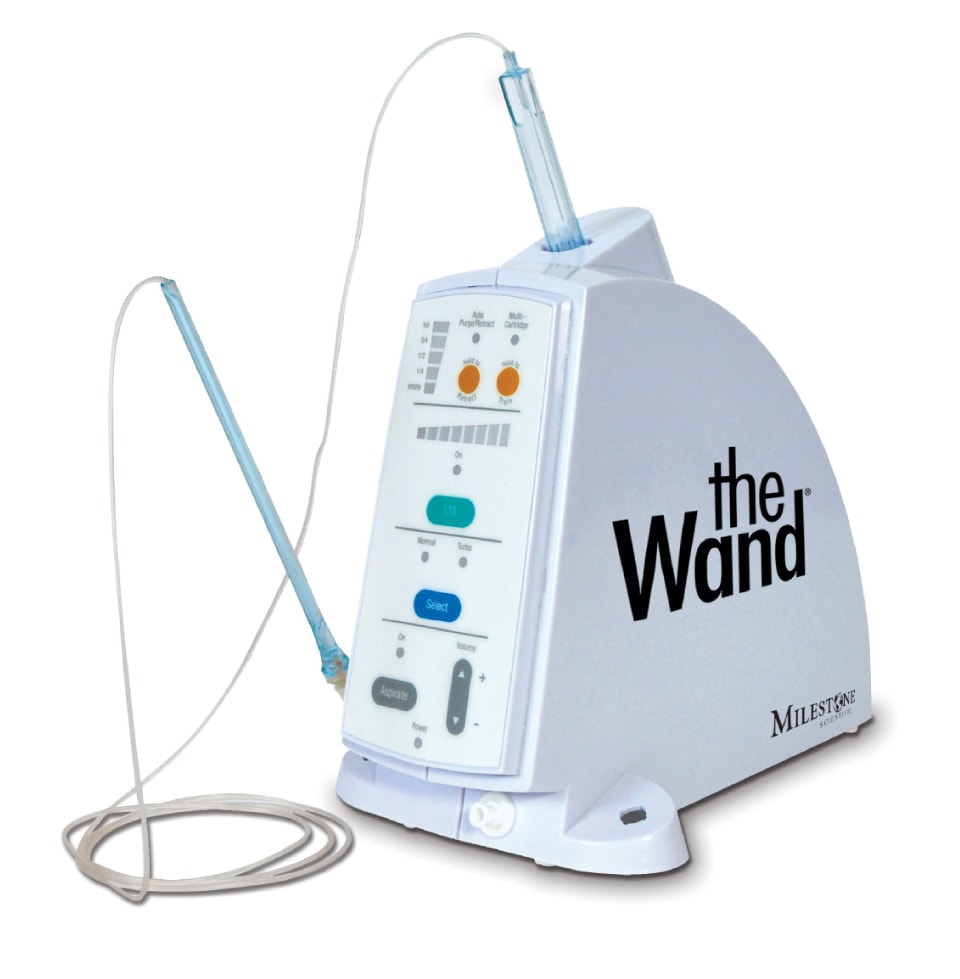
We use Wand® injections, which is a computer controlled anesthesia delivery system that provides immediate, pain free dental anesthesia for all injection types.